
12 Best Places to Live in Portugal (for Expats and Digital Nomads)
Unless you’ve been completely disconnected or living as a hermit, you’ve probably heard that Portugal is the new “it” country for relocation. With its easy visa process that can lead to citizenship, affordable cost of living, safety, historic charm, and stunning nature and beaches, Portugal offers an unbeatable combination for US citizens seeking a better quality of life without breaking the bank.

Whether you’re drawn to the energy of Lisbon, the historic allure of Porto, or the stunning beaches of the Algarve, we’ll guide you through the 12 best places to live in Portugal!
Moving to Portugal - what you need to know
Before we dive into best cities to live in Portugal, let’s first take a look at some key advantages and disadvantages of living here. While Portugal is an incredible country, it’s important to have a well-rounded understanding of both the benefits and the lesser-discussed challenges of living there. The more you know the better prepared you will be for your move.
- Hot spot for US citizens. Portugal is one of the easiest countries in Europe to move to. The two most popular visas are the D7 and digital nomad visa.
- Relatively low cost of living. While the cost of living in Portugal is not as low as it once was (and isn’t that the case everywhere these days?) it’s still extremely affordable compared to US prices and continues to be one of the most affordable places in Europe.
- Rising housing prices The days of super cheap housing in Lisbon and Porto have come to an end. Expect to pay an average of €1,000 for a nice one-bedroom apartment in Porto and pay closer to €1,500 for a similar flat in Lisbon.
- End of NHR tax break. The Non-Habitual Resident (NHR) tax regime in Portugal has recently come to an end, to the dismay of many who had planned to retire to or work in Portugal in the future. The (NHR) tax regime was created in 2009 to attract high-earning expats and retirees from around the world to relocate to Portugal, and offered a low taxation rate of pensions and foreign income for the first ten years of residence.
- Winters are wet and cold. Many articles refer to Mediterranean climate in Portugal but don’t be fooled…it’s not sunshine and warm weather year-round. While you may have blistering hot summers, expect wet, windy and gray winters.
Check out our complete guide to living in Portugal as an American as well as our 20 pros and cons of retiring in Portugal for more details on life in Portugal.
Best cities to live in Portugal
If you’re got your heart set on Portugal, it can be overwhelming to narrow down your options on where to live. There are just too many great choices! The best advice is to do your research beforehand–and then go on a scouting trip. If you need a place to start, here’s an overview of the 12 best cities to live in Portugal. We promise that choosing just one won’t be easy!
1. Lisbon
Lisbon is a grand dame—a bustling, colorful, energetic, and cosmopolitan city. There nearly three million people in the greater Lisbon metropolitan area—340,000 are foreigners from around the world—and just over 3,000 are the US. The real estate market is on fire and prices have been skyrocketing, however, there are still reasonably priced apartments to be had compared to the cost of similar apartments in major cities in the US. Expect to pay an average of €1,300 for a T1 (one-bedroom) apartment in city center.
Given it’s diversity, Lisbon offers international cuisine, an international airport, venues hosting top-rated entertainment, a top-notch futbol (soccer) team, reliable and inexpensive public transportation—and a ridiculously charming city filled with cobblestone streets, hills to rival San Francisco, gorgeous architecture and the infamous blue tiles called azulejos adorning the ancient buildings everywhere.
With a temperate climate, it’s no wonder this stunner of a city attracts people from all over the world. Keep in mind over-tourism is a problem, so be prepared to share this fabulous city with others with a revolving door of admirers.
2. Porto
Porto is Portugal’s second city. Less flamboyant and with only half the population of its sister city Lisbon (517,000 in Lisbon proper compared to 250,000 in Porto) Porto can certainly hold its own.
With the same steep hills of Lisbon, Porto’s streets are filled with colorful historic houses with clay tile roofs and are decorated with colorful azulejos. The city boasts a wonderful public transportation system including two major train stations, and the Porto International Airport is well connected to the city.
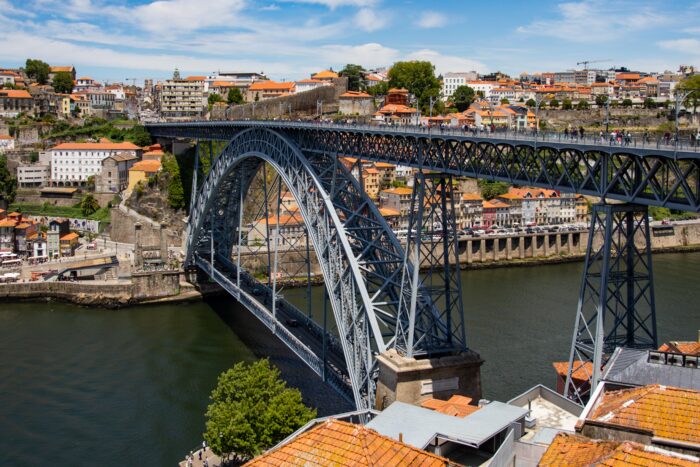
You can enjoy an exciting array of diverse cuisine such as sushi, Indian, Mexican and Thai food—not something you’ll find in every city in Europe! Porto has many museums, galleries, parks, and cultural offerings as well—for a smaller city, it’s packed with options!
There are about 700 US citizens living in Porto amongst roughly 20,000 immigrants. There are plenty of get-togethers for newcomers both by locals and foreigners, from board game nights, trivia, art classes and hikes to nearby trails. Average pricing for a one-bedroom apartment in the city is €975.
3. Setubal
Setubal is a small (122,000 inhabitants) yet busy commercial fishing center and harbor town on the Atlantic coast. It has stunning landscapes that are surrounded by river and mountains. And it’s just a quick drive to Lisbon, 30 miles/48km north.
The city is known for its golden sand beaches, Praia Saude and Galapinhos Beach which ‘Lisboetas’ flock to in the summertime. Setubal is close to the Arrábida Natural Park and Sado Estuary, where dolphins often play.
Visit the daily Mercado do Livramento which sells fruits and vegetables, nuts, cheeses such as queijo de Azeitão, the local sheep milk cheese, and freshly caught fish. Setubal has quality hospitals and schools and is well-served by public transport. Expect to pay around €830 for a 500 sf apartment near the city center. You won’t find many Americans here—less than 250 call Setubal home. With a slower pace than you’d find in Lisbon or Porto, you can relax and stroll around the winding narrow streets of and appreciate your new life in Portugal.
4. Aveiro
If you’ve heard of Aveiro, you’ve probably heard it referred to as the Venice of Portugal. Yes, there is a canal or two (actually three!) with brightly colored moliceiros, the traditional flat-bottom boats once used to haul salt from the salt beds and seaweed for processing, and yes, you can take a ride in one and enjoy the view from the water, as many tourists do during high season.
But this charming town offers more than just this. Aveiro, on the Silver Coast of Portugal, has a population of around 54,000, and you’ll find approximately 150 Americans living there. Aveiro offers easy access by train or highway to Porto to the north and Lisbon in the south, but you’ll find nearly everything you need in town, including public and private schools, hospitals, local buses, and a great selection of cafes, bars and restaurants.
Unlike Porto and Lisbon, Aveiro is relatively flat which makes for great bicycling and strolling. Expect to pay an average of €725 for a T1 (one-bedroom apartment) in the center, and just €525 outside the historic center.
5. Braga
One of the more beautiful but lesser-known cities of Portugal is Braga. It’s located in the far north, less than an hour to Spain by car or 45 minutes south by train or car to Porto. A historic city known as the “religious heart of Portugal” due to the first cathedral of Portugal being founded there in the 11th century. There are fun festivals and celebrations throughout the year, including Braga Romana.
Still under the tourism radar, the 4th largest city in Portugal is a great choice for expats, and you’ll find around 130 Americans who call Braga home. A one-bedroom apartment in the pedestrian-friendly city center costs an average of €790.
Great infrastructure such as public transportation, private schools and public schools, hospitals, grocery and retail stores galore, plus home to a major university with 21,000 students brings a youthful population and energy into the city. The weather is not as sunny and hot as you’d find in the south of Portugal, so you’ll have pleasantly mild summers and rainy winters.
6. Coimbra
Located almost equidistant between Lisbon and Porto on the Silver Coast, the ancient city of Coimbra is a viable option for expats from all over the world and is home to nearly 225 Americans within its population of 106,000. Home to the University of Coimbra, it’s one of the oldest universities in Europe—founded in 1290—and has been placed on the UNESCO register.
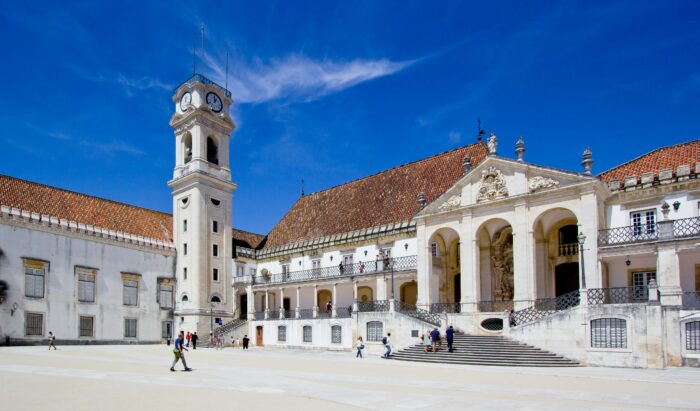
Being a university town, there’s an influx of students which lends a vibrancy to this medieval burg, especially evident during the epic graduation festivities called Queima das Fitas which honors the students and brings in top-name entertainment for a week-long celebration.
You can find a one-bedroom apartment in the centro for just under €700. Great bus routes, an easily walkable city, highly-rated private and public schools, easy access to both Lisbon and Porto, including both airports, great world cuisine and local tascas, and a chill vibe ensure that this lovely city on the riverbanks of the Rio Mondego has something for everyone.
7. Cascais
If you picture yourself living a vacation kind of life amongst golden sand beaches on the sea where locals and tourists alike kiteboard, surf and sunbathe, with top-notch restaurants on narrow cobblestone streets, a vibrant scene of expats from the world over then why not consider Cascais? Fun fact: this small town of 36,000 is made up of 16% foreigners!
Small but mighty, you’ll everything from an international school, organic grocery store, high-end boutiques, spas and more. There’s even 7 golf courses, 16 museums, 2 urban parks, a riding school, and a long walking and biking path all along the Atlantic. You definitely won’t be bored. The cost for an apartment is comparable to Lisbon, an easy 30-minute train ride away. Expect to pay €1,400 for a T1 in the historic center.
If you’re looking for a country club lifestyle, a beachy vibe or an authentic feel from this former fishing village, you’ll find it in Cascais.
8. Leira
With a population of 45,000 – of which almost 400 are Americans—Leira is a bit under-the-radar. Located inland along the Silver Coast where a river runs through it—the Rio Lis)—Leira offers photogenic bridges, parks, and green space. You’ll also find the requisite ancient and lovely churches and convents, bustling plazas and charming streets set in zigzag patterns using the traditional black and white stones.
A one-bedroom apartment in the city center will set you back around €774. There are public buses, hospitals, grocers, retail stores, and a local mercado. There’s always something going on at the cultural center which hosts events including an annual medieval festival.
Near Leira are two international schools and it’s an easy 2-hour train south to Lisbon or north to Porto. A 30-minute drive along the Atlantic coast will take you to the adorable town of Nazaré to watch the world-famous surfers ride some of the largest waves in the world.
9. Portimão
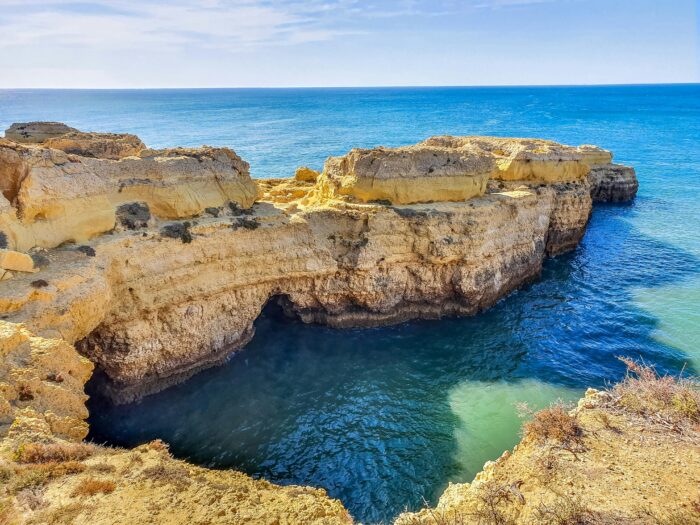
The Algarve is the southernmost region of Portugal and hugs the Atlantic Ocean with rugged towering cliffs and stunning sandy beaches lining the azure and aqua waters. Famous for warm sunny weather with 300 days of sunshine and a plethora of golf courses, some of the Algarve’s main cities are Portimão, Faro and Lagos. In comparison to the other towns in the Algarve, Portimão is relatively untouched by tourism and much more authentically Portuguese.
The traditional market is open 6 days a week and sells freshly caught fish, fruits and vegetables of all kinds, delicious baked goods, local olive oil and more. A good public transportation system with buses and a train station makes Portimão easy to navigate. There are two public schools in this town of 38,000, and a private school is a 20-minute drive away. If you’re looking for a one-bedroom apartment in the centro, expect to pay around €850 per month.
10. Faro
Faro is the capital of the Algarve, and known as the gateway to this region. Although the city is the business district of the Algarve, you will still find charming traditional fisherman’s cottages in faded yellows, blues and reds are the characteristic look as you walk the narrow streets of Faro. The beaches of Faro, as well as the beaches of Portimão are not within easy walking distance of the center, but there is reliable bus service or a short car drive to Praia do Faro.
Faro offers good public transportation and has a train station to connect to the rest of the Algarve and beyond. You’ll find a traditional municipal market selling fresh fish, meats, produce, and local wares, as well as modern grocery stores and lots of retail stores, including 2 shopping malls. There are festivals galore—a beer fest in July and a folk fest in August among others. With a population of 41,000, you’ll hear English spoken often, as there are nearly 1,000 American residents. Expect to pay €950 on average for a one-bedroom apartment in town.
11. Lagos
Lagos is a heady mix of old and new, traditional and modern. Remnants of Moorish walls which once protected the city can be found, as well as buildings covered in candy-colored azulejo tiles, imposing stone churches and contemporary sleek bars. And the spectacular cliffs, caves, and rocky promontories along the coast are Instagram legends.
Lagos is home to expats from many countries and the population of this small town – less than 20,000 in the off-season. However, it grows exponentially in the summer. You’ll find a traditional mercado housed in a modern building selling herbs, meats, fresh fish, and the requisite vegetables and fruits. Museums, restaurants, cafes and bars share street space with surf shops, souvenir stands and art galleries.
If you’d like to rent a T1 (one-bedroom apartment) in the center, expect to pay an average of €950. With a bus hub and a train station, getting around is relatively easy, and you’ll find a few international schools within a 20-minute drive from Lagos.
12. Funchal, Madeira
If island life is more your style, and you can envision yourself swimming, hiking, and enjoying the beauty of nature, you may want to consider the gorgeous island of Madeira. Located off the coast of Africa due east of Morocco and north of Spain’s Canary Islands, this tiny but mighty Portuguese island, part of an archipelago of 3 smaller islands, offers stunning beauty on every coast.
Because of its southerly location, the temperature is warm and the skies are sunny almost year-round. Most expats live in the capital, Funchal, on the southern coast of Madeira. Although the population in Funchal is close to 100,000 there are only a handful of Americans, numbering approximately 160. Funchal has hills—big hills—and the streets and sidewalks are of Portuguese calçada, the classic black and white stones set into patterns.
The Mercado dos Lavradores is chock-full of exotic fruits and vegetables, the likes you may have never seen! There are local buses to get around. Great healthcare is available, both public and private; there are also two international schools in Funchal. It’s not too inexpensive to rent a one-bedroom apartment, you’ll most likely pay around €1,250.
Where to live in Portugal: the best places for expats
Portugal offers an abundance of options on where to set down roots, from big cosmopolitan cities and charming villages to university towns and island life. For a relatively small country (the size of Indiana or Maine!) you can pick and choose what works for you.
If you want more information on how to move abroad, check out our resources:
- Sign up for the next Move Abroad After 30 Masterclass to learn how to move abroad and create a personalized plan that works!
- Join our Facebook group for women age 30 and up who want to move abroad
- Grab your copy of our Ultimate Visa Guide to Living in Europe as an American

